Insight Enterprise AI Practical Workflows in the UK: Why Firms Are Moving Beyond Pilots
Enterprise AI practical workflows in the UK are becoming a more important investment priority as businesses look beyond experimental tools towards measurable productivity and revenue gains. The evidence suggests that AI adoption is growing, but turning it into commercial value remains difficult.
By Vidyadhar. Published . 6 minute read.

The short version
UK businesses are increasingly interested in embedding AI into existing operations, but adoption figures do not yet prove a widespread shift from pilots to profitable deployments.
Agentic AI, workflow automation and targeted internal development offer opportunities to reduce repetitive work, although measurable revenue gains remain limited.
Businesses should prioritise workflows with clear costs, measurable outcomes and human oversight before committing to larger AI investments.
UK businesses have a stronger reason to invest in practical AI workflows than in another isolated demonstration. The commercial value of artificial intelligence depends on whether it improves an existing process, reduces operating costs or creates revenue that would otherwise be difficult to generate.
That is becoming the central test for enterprise AI investment. Experiments can demonstrate what a model is capable of doing, but production systems must work reliably with business data, employees, customers and existing software.
Enterprise AI practical workflows in the UK are becoming the real test
Recent research shows that AI has moved beyond being an unfamiliar technology, although adoption remains uneven.
In a UK consumer survey conducted in May 2026, 63% of respondents said they had used a generative AI application at some point. However, only 10% reported using a standalone generative AI application daily. The findings suggest that familiarity with AI does not automatically translate into regular use.
Business adoption tells a related story. A UK government survey covering 2025 to 2026 found that 41% of businesses handling digitised data used AI for at least one purpose. Among large businesses, the figure reached 82%.
These figures describe different populations and activities. Consumer use cannot be compared directly with enterprise adoption, and neither measure establishes that AI projects are profitable.
Nevertheless, they help explain why business leaders are changing the questions they ask about AI. Demonstrating that employees can generate text or analyse documents is relatively straightforward. Establishing whether those capabilities improve an entire business process requires more evidence.
We think the useful distinction is between AI that produces an interesting output and AI that completes a valuable task within an existing operation.
Proofs of concept do not guarantee business returns
A proof of concept normally tests whether a proposed system can perform a specific task. It might summarise customer correspondence, classify support requests or extract information from invoices.
These experiments can be useful, especially when a business is assessing technical feasibility. The problem comes when a successful demonstration is treated as evidence of financial value.
Production workflows introduce additional requirements. They need reliable access to information, clear permissions, exception handling, monitoring and staff who understand when an AI-generated result requires correction.
Government research updated in February 2026 illustrates the difference between productivity improvements and financial outcomes. Among businesses already using AI, 75% reported improved workforce productivity and 57% reported new or improved processes or operations.
However, 77% said they had not yet experienced a change in revenue, while 12% reported an increase. These were self-reported results rather than independently measured financial returns.
The findings support a cautious conclusion. AI can help businesses work more efficiently, but efficiency gains do not necessarily become additional revenue. Savings may also be reduced by software subscriptions, integration work, staff training and ongoing supervision.
For enterprise buyers, that makes the workflow itself more important than the model used to support it.
Agentic AI could connect isolated tasks into useful processes
Agentic AI refers to systems that can plan and carry out sequences of actions using available tools and information. Rather than responding only to individual prompts, an agent may retrieve records, prepare documents, update applications and request approval before completing a task.
Consider a customer support workflow. An AI system could identify the subject of an incoming request, retrieve relevant account information, draft a response and prepare an update in the customer relationship management system. An employee would review the proposed action before it is sent or recorded.
That type of integration could reduce repetitive administrative work. It could also introduce risks if the system retrieves incorrect records, misunderstands instructions or changes information without suitable controls.
The technology is still developing. In the government's 2025 business research, agentic AI was the least adopted AI technology among surveyed AI users, at 7%. Businesses also identified significant implementation barriers.
Products such as Granola illustrate interest in AI-supported meeting documentation and follow-up work. Wayve represents a different application of AI, focused on autonomous driving rather than conventional office automation.
These examples demonstrate the range of possible applications, but they should not be treated as equivalent enterprise workflow products. Nor do they establish that agentic systems are already delivering positive returns across UK businesses.
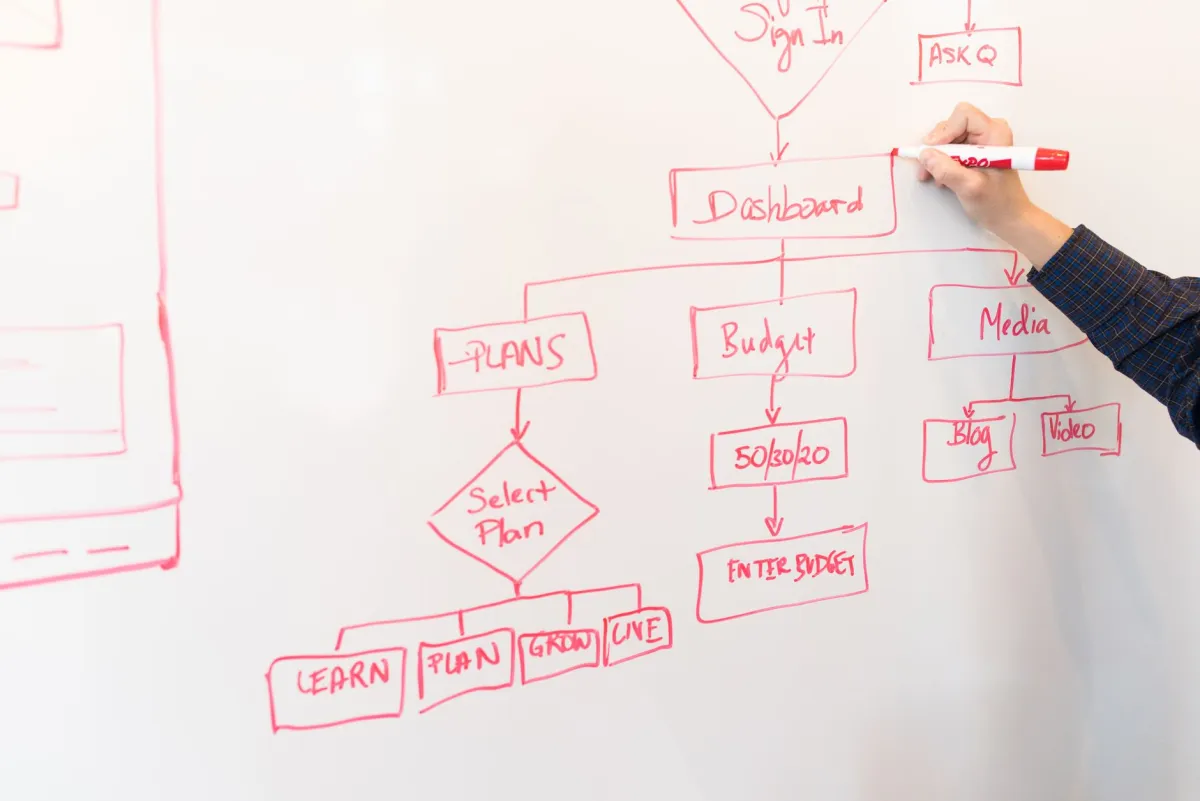
Build versus buy is becoming a more practical decision
AI-assisted software development creates another opportunity for organisations with specialised requirements. Instead of commissioning every internal tool from an external agency, a business may consider developing smaller applications with its own technical team.
For example, a logistics company might need a system that combines delivery records, customer instructions and internal reporting. A general-purpose software package may cover much of that work, while a custom application could address the remaining requirements.
Sector-specific language models and AI coding assistants may make such development easier. However, the ability to generate application code does not remove the need for software architecture, testing, security reviews, maintenance or technical ownership.
There is also insufficient verified evidence to conclude that UK companies are broadly replacing external software agencies with internal AI development teams.
In fact, the available research suggests that purchasing existing software remains important. Government research found that, among organisations using or planning to use AI, 65% planned to implement off-the-shelf AI applications and 59% planned to embed AI into existing systems.
These categories can overlap. They indicate interest in practical deployment, but they do not establish a general reversal from buying software to building it internally.
We would therefore avoid treating internal development as the default choice. Buying a maintained product may be more economical for standard activities such as accounting, customer support and document management. Building becomes more attractive when the workflow is genuinely distinctive and the organisation can support the software over time.
The strongest objection is that AI pilots are still necessary
There is a reasonable argument against moving too quickly towards production workflows. Many businesses still need to establish whether AI can handle their data, meet accuracy requirements and operate within existing security policies.
A pilot can identify these problems before a company exposes customers or important business records to a new system. In regulated industries, that caution is especially important.
The government survey covering 2025 to 2026 found that 17% of AI-using businesses had no AI policy in place. This highlights a governance gap that organisations should address before allowing automated systems to make consequential decisions.
The answer is not to abandon experimentation. It is to make experiments accountable. A useful pilot should have a defined business problem, a baseline measurement, clear success criteria and a decision about whether to proceed.
Where those conditions are absent, businesses risk continuing demonstrations without learning whether the technology is worth operating.
What UK businesses should do now
We recommend starting with a process that employees already perform regularly and that managers can measure without introducing a complicated reporting system.
Identify the existing problem. Select a workflow with repetitive work, delays, errors or avoidable administrative effort.
Measure the baseline. Record the time, staff involvement, error rates and operating costs before introducing AI.
Choose the simplest suitable approach. Compare existing software features, specialist applications and internal development before commissioning a custom system.
Keep people responsible. Require human approval for sensitive decisions, customer communications and changes to important records.
Measure the full cost. Include integration, supervision, maintenance, security and training alongside software costs.
Review the commercial outcome. Continue investment when the workflow produces reliable improvements that justify its ongoing cost.
Businesses should also distinguish between cost savings and revenue generation. Faster internal reporting may improve productivity without increasing sales. Better customer response times could support retention, but the business still needs evidence that the improvement affects commercial results.
The most important change in enterprise AI is therefore a change in evaluation. A successful demonstration is the beginning of a business case, not its conclusion.
For UK organisations, the practical opportunity lies in connecting AI to useful work, maintaining control over its decisions and measuring whether the results justify the investment. That is a stronger basis for adoption than deploying new tools simply because the technology is available.
Where these numbers come from
The adoption and usage figures come from published UK government business research covering 2025 and 2025 to 2026, alongside a nationally representative UK consumer survey conducted in May 2026. The surveys measure different populations and outcomes, so their percentages should not be interpreted as directly comparable or as evidence of verified financial returns.
Sources
- Deloitte UK (29 September 2026). Digital Consumer Trends 2026
- Department for Science, Innovation and Technology (18 June 2026). UK Business Data Survey 2026
- Department for Science, Innovation and Technology (13 February 2026). AI Adoption Research
Questions people ask
What are practical enterprise AI workflows?
Practical enterprise AI workflows use artificial intelligence within existing business processes, such as customer support, document handling or internal reporting. Their value is assessed through measurable improvements in time, accuracy, operating costs or revenue.
Why are UK businesses moving beyond AI proofs of concept?
Businesses need evidence that AI can deliver useful results in everyday operations rather than only perform well in demonstrations. UK research shows reported productivity improvements among AI adopters, although direct revenue gains remain less common.
What is agentic AI in enterprise automation?
Agentic AI refers to systems that can plan and perform sequences of tasks using software tools and business information. Organisations still need permissions, monitoring and human oversight to manage errors and prevent inappropriate actions.
Should UK companies build or buy AI software?
Buying existing software is often more practical for common business requirements, especially when maintenance and support are included. Internal development may be appropriate for specialised workflows, provided the company has the technical skills to maintain and secure the system.
How can a business measure return on investment from AI?
Start by measuring the existing workflow, including staff time, errors and operating costs. Compare those results with the AI-supported process while accounting for software, integration, supervision and maintenance costs.
What prevents UK enterprises from adopting agentic AI?
Common obstacles include limited technical skills, data security concerns, implementation costs and uncertainty about reliability. Organisations also need governance policies and clear responsibilities before allowing AI systems to perform important business actions.