Report North America Physical AI Market Forecast: 33% Annual Growth Through 2035
The North America Physical AI Market is forecast to grow at a compound annual rate of 33.00% from 2026 to 2035, reaching more than 17 times its 2025 size. We examine the forecast, leading segments, regional differences and the risks that could affect adoption.
By Vidyadhar. Published . 8 minute read.
The short version
The North America physical AI market is forecast to grow at a 33.00% compound annual rate from 2026 to 2035, compared with its 2025 baseline.
Hardware accounted for 57.80% of the regional market in 2025, while software is forecast to grow at 35.60% annually through 2035.
The United States held 87.40% of the North American market in 2025, while Canada is forecast to grow at 37.75% annually from 2026 to 2035.
Key findings
Market expansion: The North American market is forecast to grow at a compound annual growth rate of 33.00% between 2026 and 2035.
Hardware leadership: Hardware represented 57.80% of the market in 2025, making it the largest component category.
Humanoid robotics: Humanoids are forecast to grow at 41.30% annually from 2026 to 2035, faster than the other reported robot form factors.
Industrial demand: Manufacturing and automotive applications accounted for 44.10% of the market in 2025.
Regional differences: The United States represented 87.40% of regional revenue in 2025, while Canada's forecast annual growth rate is 37.75%.
North America Physical AI Market size and forecast
The North American physical AI market is entering a period of rapid projected expansion. The research estimates a compound annual growth rate of 33.00% from 2026 to 2035, driven by growing interest in intelligent robotics, automated manufacturing and autonomous systems.
Physical AI refers to artificial intelligence used in systems that interact with the physical world. These systems combine software, sensors, computing hardware and mechanical components to perceive their surroundings and perform actions.
Examples include industrial robotic arms, autonomous mobile robots, collaborative robots and humanoid platforms. Unlike AI software that generates text or analyses documents, physical AI must translate information into movements and decisions within real environments.
The market covers hardware, software and services. It also includes technologies such as computer vision, machine learning, natural language processing and reinforcement learning.
The headline growth forecast suggests substantial commercial potential, but it should not be treated as a guaranteed outcome. Adoption depends on hardware reliability, integration requirements, workforce readiness and whether organisations can demonstrate operational benefits.
The research also estimates that North America represented approximately 33.25% of the global physical AI market in 2025. This indicates the region's importance within the wider industry, although regional leadership does not mean every application is equally mature.
Physical AI market segments and growth forecasts
The market is divided into component, technology, form factor, deployment and application categories. The available research identifies leading segments by 2025 market share and several categories expected to grow fastest through 2035.
| Market category | Leading segment | 2025 market share | Fastest-growing segment | Forecast CAGR, 2026–2035 |
|---|---|---|---|---|
| Component | Hardware | 57.80% | Software | 35.60% |
| Technology | Computer vision | 46.30% | Reinforcement learning and control systems | 32.80% |
| Form factor | Industrial robots | 35.20% | Humanoids | 41.30% |
| Application | Manufacturing and automotive | 44.10% | Healthcare | 36.20% |
The figures show an important distinction between established demand and future growth expectations. Traditional industrial robots already have a substantial installed base, while humanoid platforms are associated with a much faster forecast growth rate.
These percentages measure different aspects of the market. A segment with the highest growth rate does not necessarily generate the most revenue or offer the lowest implementation risk.
Hardware leads while software gains importance
Hardware represented 57.80% of North American physical AI revenue in 2025. This reflects the importance of robotic mechanisms, sensors, actuators and computing components.
Physical AI systems require equipment capable of operating in real environments. A software model cannot move products through a warehouse or inspect industrial machinery without suitable hardware.
Hardware also creates practical barriers to deployment. Organisations must consider installation, maintenance, spare parts, equipment compatibility and the conditions in which robots will operate.
Software is forecast to grow at 35.60% annually through 2035. This suggests increasing demand for systems that support perception, planning, control and coordination across robotic platforms.
For buyers, the distinction matters. Hardware determines what a robot can physically do, while software affects how it responds to changing conditions and how easily its behaviour can be updated.
We recommend assessing these elements together. Strong AI software cannot compensate for unsuitable mechanical equipment, and capable hardware may provide limited value without dependable control systems.
Computer vision remains the leading technology
Computer vision accounted for 46.30% of the physical AI technology market in 2025. It supports tasks such as object recognition, visual inspection, navigation and identifying obstacles.
These capabilities are relevant to factories, warehouses and other environments where robots need to interpret changing surroundings.
Reinforcement learning and control systems are forecast to grow at 32.80% annually from 2026 to 2035. These technologies can help robotic systems develop control strategies through training and feedback.
However, learning-based systems introduce additional testing requirements. A robot that performs well in simulation may behave differently when exposed to unfamiliar objects, lighting conditions or physical obstacles.
For organisations evaluating physical AI, controlled testing in the intended operating environment remains essential.
Industrial robots lead while humanoids attract investment
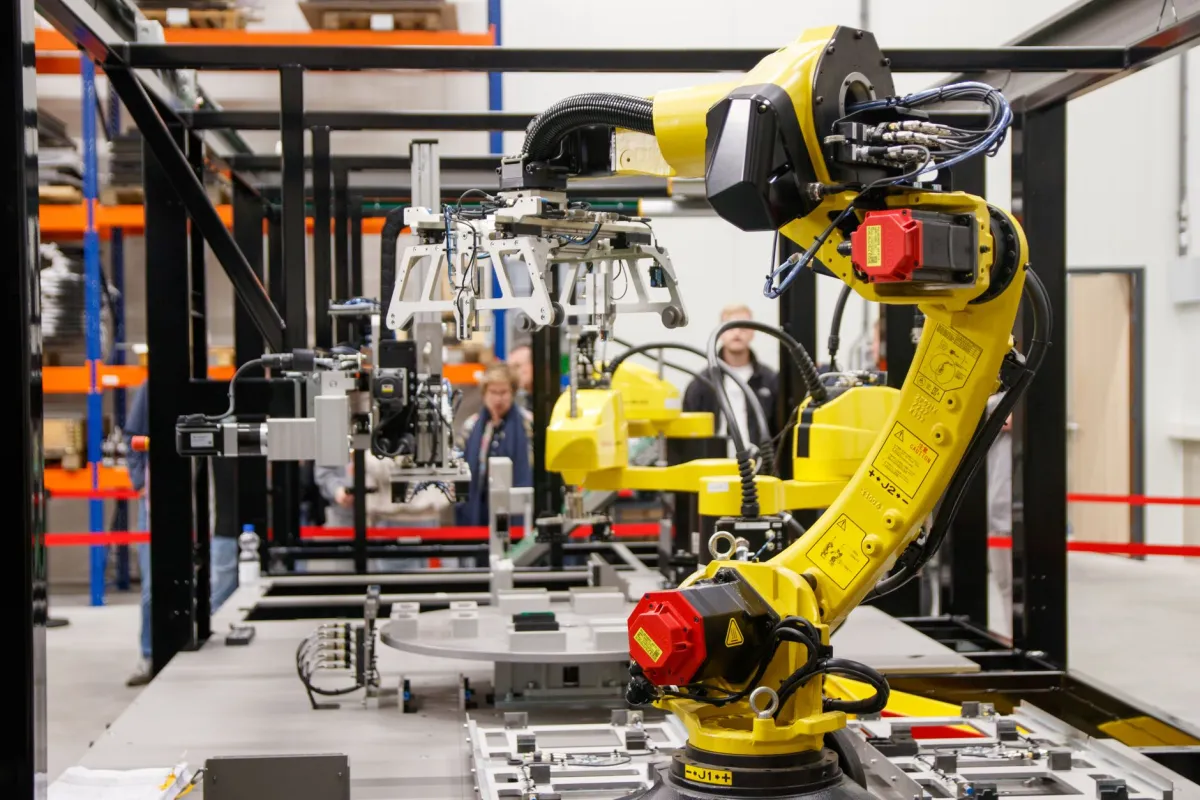
Industrial robots accounted for 35.20% of the market by form factor in 2025. Their position reflects established use in automotive production, assembly, handling and other repetitive industrial processes.
Humanoid robots are forecast to record annual growth of 41.30% through 2035, the highest reported rate among form factors.
Humanoids attract interest because they are intended to work in environments designed around human movement and interaction. In principle, this could reduce the need to redesign some workplaces around specialised machines.
However, the commercial case remains less established than it is for many conventional industrial robots. Walking, grasping, balancing and responding safely to unexpected events create demanding engineering requirements.
We would distinguish successful demonstrations from sustained commercial operation. Buyers need evidence of task completion, reliability, maintenance requirements and safe performance across normal working conditions.
Manufacturing dominates while healthcare grows faster
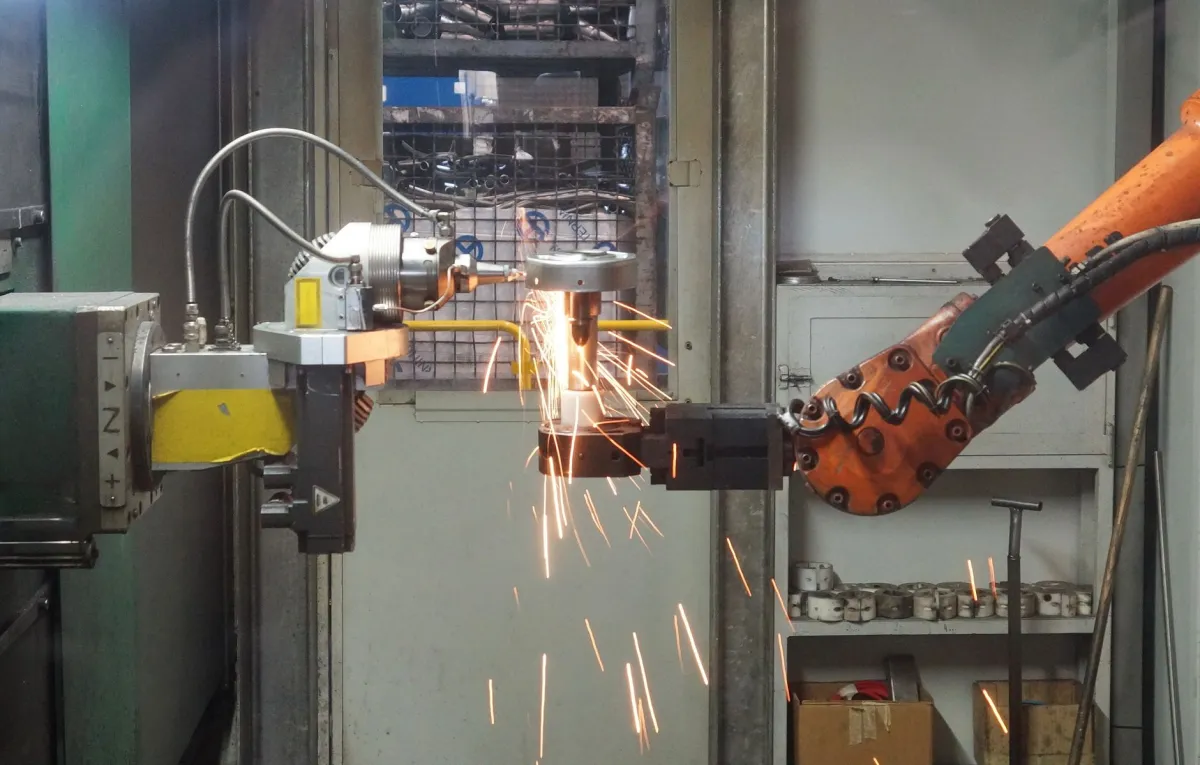
Manufacturing and automotive applications represented 44.10% of the market in 2025. These industries have established automation processes and production environments where robotic systems can perform clearly defined tasks.
Physical AI may support material handling, inspection, assembly and movement of components between production stages.
Healthcare is forecast to grow at 36.20% annually from 2026 to 2035. Potential applications include surgical assistance, hospital logistics, equipment transport and patient-support systems.
Healthcare deployment also presents distinct challenges. Medical environments require careful attention to safety, regulatory requirements, clinical suitability and staff training.
A robot that works reliably in a warehouse cannot automatically be transferred into patient-facing work.
The research also identifies logistics, defence and security, and agriculture as application categories. However, the available material does not provide comparable market shares or growth forecasts for all these sectors.
We therefore cannot rank their future commercial opportunities with the same confidence as the reported leading segments.
United States and Canada market outlook
The United States accounted for 87.40% of the North American physical AI market in 2025. Canada represented the remaining 12.60% in the report's regional breakdown.
The United States benefits from a concentration of robotics developers, semiconductor companies, research organisations and large manufacturing customers.
Its market is forecast to grow at 32.17% annually from 2026 to 2035. This is below the forecast for Canada but applies to a much larger existing market.
Canada is forecast to grow at 37.75% annually during the same period. Research activity, manufacturing automation and collaboration between universities and commercial robotics companies are identified as important drivers.
| Market | Share of North America, 2025 | Forecast CAGR, 2026–2035 |
|---|---|---|
| United States | 87.40% | 32.17% |
| Canada | 12.60% | 37.75% |
Canada's higher projected growth rate should not be interpreted as evidence that it will overtake the United States in market size. Growth percentages describe relative expansion, not absolute market leadership.
The report's country-level regional figures cover the United States and Canada. It does not provide a comparable Mexico breakdown within its North American segment.
What is driving physical AI adoption
Several commercial and technical developments are supporting interest in physical AI.
Manufacturers and logistics operators face pressure to improve productivity and manage staffing constraints. Robots can perform repetitive tasks and support operations where dependable automation is practical.
Advances in sensors, computing hardware and AI models are also making more complex robotic applications possible.
Investment in humanoid robotics and industrial automation has encouraged development of platforms designed for a wider range of tasks.
Cloud-based and hybrid deployment models may also help organisations distribute processing between local equipment and remote computing infrastructure.
However, the available report does not provide deployment market shares or growth rates for on-device, cloud-based and hybrid systems. Their relative adoption cannot be quantified from the published summary.
Risks that could slow market growth
The 33.00% annual growth forecast depends on successful commercial adoption. Several barriers could affect that outcome.
Deployment complexity: Robots must work with existing machinery, production systems, warehouse layouts and business software. Integration can require substantial engineering work.
Safety: Physical AI systems interact with people, equipment and real environments. Organisations need suitable safeguards, testing and operating procedures.
Reliability: Demonstrations do not establish long-term performance. Unexpected failures, maintenance requirements and inconsistent task completion can weaken the business case.
Workforce readiness: Employees need training to operate, supervise and maintain robotic equipment. Organisations must also consider how automation changes existing roles.
Data and connectivity: Connected robots may depend on sensors, local networks and external computing services. System design must account for outages, cybersecurity and data handling.
We would treat the forecast as a market scenario rather than proof that every robotics category will achieve widespread commercial adoption.
What this means for you
For manufacturers and logistics operators, physical AI is worth investigating where tasks are repetitive, measurable and difficult to perform consistently with existing processes.
We recommend beginning with a specific operational problem rather than selecting a robot because it uses a new AI model.
Identify a suitable task. Choose work with clear inputs, outputs and measurable performance requirements.
Assess existing automation. Compare physical AI with conventional industrial robots and other established systems.
Test in the intended environment. Evaluate safety, reliability, task completion and maintenance requirements under realistic conditions.
Review integration needs. Check compatibility with existing equipment, warehouse systems and business software.
Plan for ongoing operation. Include employee training, technical support, updates and equipment maintenance in the evaluation.
Separate forecasts from evidence. Use market growth estimates to understand industry direction, but make purchasing decisions using verified operational results.
For software developers, the growing importance of perception, control and robotics integration may create opportunities to support existing hardware platforms.
For investors and researchers, the strongest reported growth categories deserve attention, but high forecast growth does not remove technical or commercial risk.
The North American physical AI market has a substantial growth forecast through 2035. Our conclusion is that established industrial automation offers a clearer current commercial base, while humanoid robotics and advanced control software represent faster-growing but less certain opportunities.
Where these numbers come from
All market shares, growth rates and forecasts come from the published SNS Insider research report updated on October 12, 2026, rather than our own tests. The figures cover a 2025 base year and forecasts for 2026–2035. We have not independently verified the report's underlying market model or company-level deployment claims.
Questions people ask
How fast is the North America physical AI market expected to grow?
The market is forecast to grow at a compound annual rate of 33.00% from 2026 to 2035. This is a published industry forecast, not a measured result or guaranteed growth rate.
Which country leads the North American physical AI market?
The United States accounted for 87.40% of the reported regional market in 2025. Canada held 12.60% and is forecast to grow faster during the 2026–2035 period.
Which physical AI segment has the largest market share?
Hardware led the component category with 57.80% market share in 2025. Industrial robots led the form-factor category with 35.20%.
Are humanoid robots the fastest-growing physical AI category?
Humanoid robots are forecast to grow at 41.30% annually from 2026 to 2035 within the form-factor category. This does not mean they currently generate more revenue than industrial robots.
What industries are adopting physical AI in North America?
Manufacturing and automotive applications represented 44.10% of the market in 2025. Healthcare is forecast to grow at 36.20% annually, while logistics, agriculture and defence are also identified as application areas.
What are the biggest barriers to physical AI adoption?
Deployment complexity, equipment requirements, safety certification and workforce training can slow adoption. Organisations also need to establish that robotic systems deliver reliable results in real operating environments.